
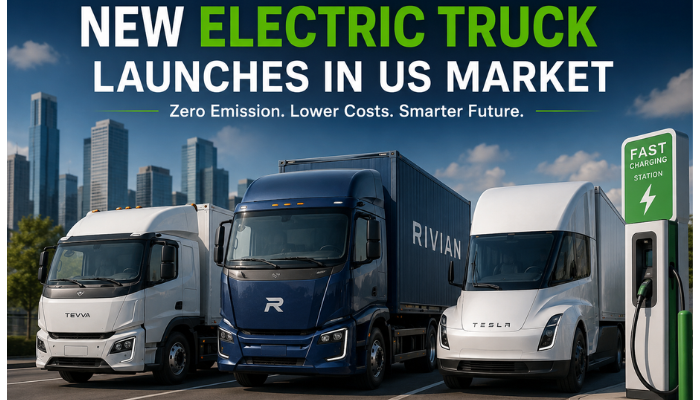
The Electric Truck segment in the United States is witnessing rapid growth as major manufacturers continue introducing advanced zero-emission commercial vehicles. Rising fuel costs, stricter emission regulations, and increasing demand for sustainable transportation are encouraging fleet operators to shift toward electric mobility. Several new truck models have recently entered the market, offering improved driving range, faster charging technology, and lower operating costs. These developments are helping the Electric Truck industry gain momentum across logistics, delivery, and freight transportation sectors.
Leading truck manufacturers are focusing on innovation to make the Electric Truck category more practical for commercial use. New models are being designed with high-capacity battery packs, enhanced safety systems, and smart fleet management features. Many companies are also integrating advanced telematics solutions that allow operators to monitor vehicle performance, battery health, and route efficiency in real time. Such technologies help businesses reduce downtime while improving productivity and sustainability goals.
The growing charging infrastructure across the United States is another major factor supporting the adoption of Electric Truck solutions. Public and private investments are expanding fast-charging networks along key freight corridors and urban delivery routes. As charging stations become more accessible, fleet operators gain greater confidence in transitioning from traditional diesel-powered vehicles to electric alternatives. Government incentives and tax credits are also playing an important role by reducing the overall cost of ownership for new electric commercial vehicles.
Industry experts believe that the Electric Truck market will continue expanding as battery technology improves. New battery systems are delivering longer driving ranges and shorter charging times compared to earlier generations. This progress is particularly important for regional freight operations and last-mile delivery services, where efficiency and reliability are critical. Fleet operators are increasingly evaluating electric vehicles as a long-term investment that can help lower maintenance expenses and reduce dependence on fossil fuels.
Competition within the Electric Truck sector is becoming stronger as established manufacturers and emerging startups introduce new products. Companies are targeting different segments, including light-duty delivery trucks, medium-duty commercial vehicles, and heavy-duty freight haulers. The availability of multiple options allows businesses to select vehicles that match their operational requirements while supporting environmental objectives. Industry analysts expect continued product launches throughout the coming years as demand for cleaner transportation solutions rises.
The US commercial vehicle market is entering a significant transformation phase, with electric mobility becoming a central focus for manufacturers and fleet operators alike. Investments in battery production, charging infrastructure, and vehicle technology are accelerating the transition toward sustainable freight transportation. As more businesses adopt electric fleets, the Electric Truck industry is expected to play a key role in reducing emissions while creating new opportunities for innovation, efficiency, and long-term growth across the transportation sector.