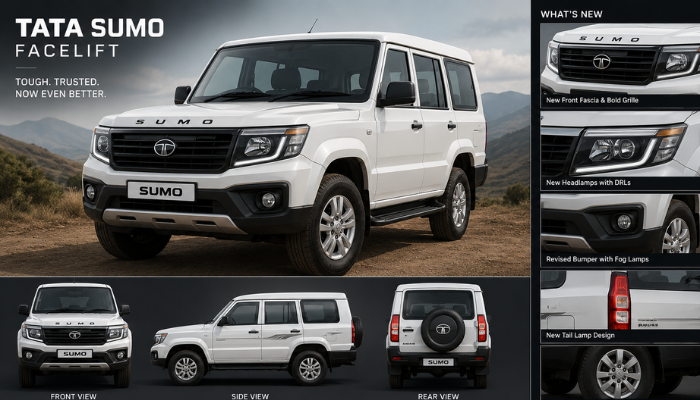
The Tata Sumo Facelift is one of those vehicles that could still create excitement among automobile enthusiasts if it were reintroduced today. During its peak years, the Tata Sumo was known for its rugged construction, spacious cabin, and dependable performance. It became a popular choice for families, commercial operators, and rural users across India. If Tata Motors were to bring back this legendary nameplate in a modern form, the Tata Sumo Facelift could combine the strength of the original model with the latest automotive technology and design trends.
From a design perspective, the imagined Tata Sumo Facelift would likely feature a bold and modern front fascia. A larger grille inspired by Tata’s current design language, sleek LED headlamps, daytime running lights, and a muscular bumper could give the SUV a commanding road presence. While retaining the boxy silhouette that made the original Sumo instantly recognizable, designers might add sharper character lines, premium alloy wheels, and stylish roof rails. This approach would preserve the SUV’s heritage while making it appealing to a new generation of buyers.
Inside the cabin, the Tata Sumo Facelift could offer a significantly upgraded experience compared to the original model. A large touchscreen infotainment system with wireless Android Auto and Apple CarPlay, a digital instrument cluster, automatic climate control, and connected car technology could be part of the package. The spacious layout, which was one of the Sumo’s biggest strengths, would likely remain a key highlight. With seating configurations for seven to nine passengers, the SUV could continue serving both family and utility-focused customers while delivering improved comfort and convenience.
Under the hood, the Tata Sumo Facelift could be powered by modern petrol, diesel, or even hybrid powertrain options that comply with current emission standards. Tata Motors’ latest engine technology could provide a balance of performance, fuel efficiency, and reliability. Enhanced suspension tuning, improved ride quality, and optional terrain-focused driving modes could make the SUV suitable for both urban commuting and challenging rural roads. Such upgrades would help the vehicle remain competitive in today’s rapidly evolving SUV market.
Safety would likely be a major focus for the modern Tata Sumo Facelift. Features such as multiple airbags, electronic stability control, traction control, a 360-degree camera, and advanced driver assistance systems could be included. Tata Motors has earned recognition for prioritizing vehicle safety in recent years, and a revived Sumo would likely benefit from a strong body structure and enhanced crash protection. These improvements would transform the SUV from a nostalgic nameplate into a modern, safety-conscious vehicle.
In today’s growing SUV segment, the return of the Tata Sumo Facelift could attract both loyal fans of the original model and new customers seeking a practical yet capable vehicle. Its combination of spaciousness, durability, modern technology, and iconic heritage could make it a unique offering in the market. While this remains an imaginative concept, a contemporary Tata Sumo Facelift has the potential to revive one of India’s most memorable automotive legends and re-establish its presence on the roads once again.